

Ankle pain has many potential causes, ranging from simple fatigue to serious injuries. Sometimes it can be difficult to determine when you should manage your ankle pain at home and when you should seek medical care since ankle pain and accompanying symptoms may start out mild and worsen over time. Pay close attention to your symptoms. You should see a podiatrist if the ankle is misshapen, the calf is hot, swollen, or tender, or if you have difficulty putting weight on your leg. You should also schedule an appointment with a podiatrist if you have ankle pain that is worsening. If there is significant trauma to the ankle, it is imperative that you seek the care of a podiatrist immediately.
Ankle pain can be caused by a number of problems and may be potentially serious. If you have ankle pain, consult with Barry P. Weinstein, DPM from Bellaire Podiatry. Our doctor will assess your condition and provide you with quality foot and ankle treatment.
Ankle pain is any condition that causes pain in the ankle. Due to the fact that the ankle consists of tendons, muscles, bones, and ligaments, ankle pain can come from a number of different conditions.
Causes
The most common causes of ankle pain include:
Symptoms
Symptoms of ankle injury vary based upon the condition. Pain may include general pain and discomfort, swelling, aching, redness, bruising, burning or stabbing sensations, and/or loss of sensation.
Diagnosis
Due to the wide variety of potential causes of ankle pain, podiatrists will utilize a number of different methods to properly diagnose ankle pain. This can include asking for personal and family medical histories and of any recent injuries. Further diagnosis may include sensation tests, a physical examination, and potentially x-rays or other imaging tests.
Treatment
Just as the range of causes varies widely, so do treatments. Some more common treatments are rest, ice packs, keeping pressure off the foot, orthotics and braces, medication for inflammation and pain, and surgery.
If you have any questions, please feel free to contact one of our offices located in Bellaire and Houston, TX . We offer the newest diagnostic and treatment technologies for all your foot care needs.

Have you noticed a bony protrusion on the side of your big toe? If so, you may have developed the foot condition known as a bunion. Don't let bunions interfere with your daily activities.
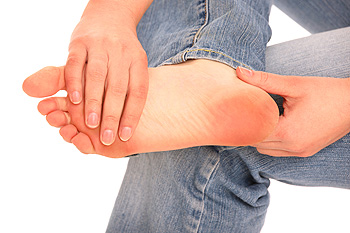
Foot cramps are spasms that occur in the muscles of the feet, most typically on the top of the foot, in the arch, and surrounding the toes. These spasms can be quite painful and may even lock your muscles and prevent movement until they subside. Foot cramps that occur occasionally are likely no cause for alarm, but if they are chronic and interfere with your ability to perform daily functions, you should go see a podiatrist to have them diagnosed. Possible causes of foot cramps can include dehydration, which starves muscles and causes them to malfunction, tight shoes that cut off circulation and restrict movement, peripheral neuropathy (nerve damage), certain medications, and excessive exercising which strains the foot muscles. Additionally, insufficient amounts of potassium in your body—which controls nerve and muscle cell functionality—may contribute to foot cramping. If foot cramps are becoming frequent or more severe, contact a podiatrist.
Foot Pain
Foot pain can be extremely painful and debilitating. If you have a foot pain, consult with Barry P. Weinstein, DPM from Bellaire Podiatry. Our doctor will assess your condition and provide you with quality foot and ankle treatment.
Causes
Foot pain is a very broad condition that could be caused by one or more ailments. The most common include:
Diagnosis
To figure out the cause of foot pain, podiatrists utilize several different methods. This can range from simple visual inspections and sensation tests to X-rays and MRI scans. Prior medical history, family medical history, and any recent physical traumatic events will all be taken into consideration for a proper diagnosis.
Treatment
Treatment depends upon the cause of the foot pain. Whether it is resting, staying off the foot, or having surgery; podiatrists have a number of treatment options available for foot pain.
If you have any questions, please feel free to contact one of our offices located in Bellaire and Houston, TX . We offer the newest diagnostic and treatment technologies for all your foot care needs.
Read more about Foot Pain
Ankle sprains are common injuries that cause the ligaments that support the ankle joint to become overly stretched or torn. If an ankle sprain does not heal properly additional sprains may occur, which may lead to ankle instability. Ankle instability can cause pain, tenderness, or swelling in the ankle, as well as make it feel wobbly or loose. Your weakened ankle may also roll out frequently on the lateral side of your foot when you are walking, standing, or playing sports. If you exhibit any of these symptoms and have had previous ankle sprains, you may be experiencing chronic ankle instability. Make an appointment with a podiatrist to receive a proper diagnosis and determine a treatment method that is specific to you.
Ankle sprains are common but need immediate attention. If you need your feet checked, contact Barry P. Weinstein, DPM from Bellaire Podiatry. Our doctor can provide the care you need to keep you pain-free and on your feet.
How Does an Ankle Sprain Occur?
Ankle sprains take place when the ligaments in your ankle are torn or stretched beyond their limits. There are multiple ways that the ankle can become injured, including twisting or rolling over onto your ankle, putting undue stress on it, or causing trauma to the ankle itself.
What Are the Symptoms?
Preventing a Sprain
Treatment of a Sprain
Treatment of a sprain depends on the severity. Many times, people are told to rest and remain off their feet completely, while others are given an air cast. If the sprain is very severe, surgery may be required.
If you have suffered an ankle sprain previously, you may want to consider additional support such as a brace and regular exercises to strengthen the ankle.
If you have any questions please feel free to contact one of our offices located in Bellaire and Houston, TX . We offer the newest diagnostic and treatment technologies for all your foot and ankle needs.
 Plantar warts are skin growths on the bottom of the foot that are caused by the human papillomavirus (HPV). Although these warts are not dangerous and typically go away without treatment, this can take several months or even years. Waiting for the warts to disappear on their own may not be a desirable option if the warts are painful or if they spread. Plantar warts can be easily spread by touching them and then touching another part of your body. You should seek medical care if the warts are painful or showing signs of infection, such as increased swelling, pain, warmth, redness, or pus drainage. Podiatrists use a variety of treatments to remove warts more quickly. These include topical medications, cryotherapy, laser therapy, and surgical removal. If you have foot warts that are bothering you, please consult with a podiatrist.
Plantar warts can be very uncomfortable. If you need your feet checked, contact Barry P. Weinstein, DPM from Bellaire Podiatry. Our doctor will assist you with all of your foot and ankle needs.
About Plantar Warts
Plantar warts are the result of HPV, or human papillomavirus, getting into open wounds on the feet. They are mostly found on the heels or balls of the feet.
While plantar warts are generally harmless, those experiencing excessive pain or those suffering from diabetes or a compromised immune system require immediate medical care. Plantar warts are easily diagnosed, usually through scraping off a bit of rough skin or by getting a biopsy.
Symptoms
Treatment
To help prevent developing plantar warts, avoid walking barefoot over abrasive surfaces that can cause cuts or wounds for HPV to get into. Avoiding direct contact with other warts, as well as not picking or rubbing existing warts, can help prevent the further spread of plantar warts. However, if you think you have developed plantar warts, speak to your podiatrist. He or she can diagnose the warts on your feet and recommend the appropriate treatment options.
If you have any questions please feel free to contact one of our offices located in Bellaire and Houston, TX . We offer the newest diagnostic and treatment technologies for all your foot and ankle needs.
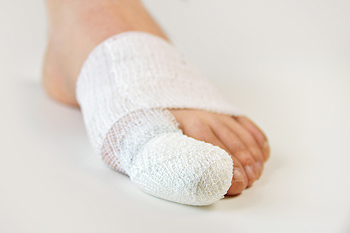
Turf toe, also known as a metatarsophalangeal (MTP) joint sprain, is an injury common in sports like football, soccer, basketball, gymnastics, dancing, and wrestling. When the big toe is bent too far back during activity, the ligaments or joint capsule underneath the toe can overstretch or tear. MTP joint sprains are classified into three groups based on their severity. A Grade 1 sprain is mild and characterized by localized pain and minimal swelling. A Grade 2 sprain is characterized by moderate pain, swelling, and bruising of the big toe. A Grade 3 sprain is severe and involves intense pain, swelling, bruising, and difficulty moving the big toe. If you have turf toe, it is suggested that you seek the care of a podiatrist as soon as possible.
Ankle and foot injuries are common among athletes and in many sports. They can be caused by several problems and may be potentially serious. If you are feeling pain or think you were injured in a sporting event or when exercising, consult with Barry P. Weinstein, DPM from Bellaire Podiatry. Our doctor will assess your condition and provide you with quality foot and ankle treatment.
Common Injuries
The most common injuries that occur in sporting activities include:
Symptoms
Symptoms vary depending upon the injury and in some cases, there may be no symptoms at all. However, in most cases, some form of symptom is experienced. Pain, aching, burning, bruising, tenderness, tightness or stiffness, sensation loss, difficulty moving, and swelling are the most common symptoms.
Treatment
Just as symptoms vary depending upon the injury, so do treatment options. A common treatment method is known as the RICE method. This method involves rest, applying ice, compression and elevating the afflicted foot or ankle. If the injury appears to be more serious, surgery might be required, such as arthroscopic or reconstructive surgery. Lastly, rehabilitation or therapy might be needed to gain full functionality in the afflicted area. Any discomfort experienced by an athlete must be evaluated by a licensed, reputable medical professional.
If you have any questions, please feel free to contact one of our offices located in Bellaire and Houston, TX . We offer the newest diagnostic and treatment technologies for all your foot care needs.

Sesamoiditis is a foot condition in which the sesamoid bones, located in the ball of the foot just beneath the big toe, become injured or inflamed. If you have sesamoiditis, it is very important that you rest the affected foot, however, this can be somewhat difficult without proper planning. To give your foot time to heal, you will likely need to avoid putting pressure and weight on the foot as much as possible. In the early stages of healing, when the sesamoids and surrounding areas are inflamed, it may help to also avoid bending the toes. Do simple ankle stretches and strengthening exercises to maintain your ankle mobility. Good ankle mobility can help keep excess pressure off of your sesamoids when you walk. Finally, wearing the right shoes can be very helpful during the healing process. Choose shoes with a wide toe box and without high heels. A podiatrist may also suggest orthotics. If you have sesamoiditis, please consult with your local podiatrist.
Sesamoiditis is an unpleasant foot condition characterized by pain in the balls of the feet. If you think you’re struggling with sesamoiditis, contact Barry P. Weinstein, DPM of Bellaire Podiatry. Our doctor will treat your condition thoroughly and effectively.
Sesamoiditis
Sesamoiditis is a condition of the foot that affects the ball of the foot. It is more common in younger people than it is in older people. It can also occur with people who have begun a new exercise program, since their bodies are adjusting to the new physical regimen. Pain may also be caused by the inflammation of tendons surrounding the bones. It is important to seek treatment in its early stages because if you ignore the pain, this condition can lead to more serious problems such as severe irritation and bone fractures.
Causes of Sesamoiditis
Treatment for sesamoiditis is non-invasive and simple. Doctors may recommend a strict rest period where the patient forgoes most physical activity. This will help give the patient time to heal their feet through limited activity. For serious cases, it is best to speak with your doctor to determine a treatment option that will help your specific needs.
If you have any questions please feel free to contact one of our offices located in Bellaire and Houston, TX . We offer the newest diagnostic and treatment technologies for all your foot and ankle needs.
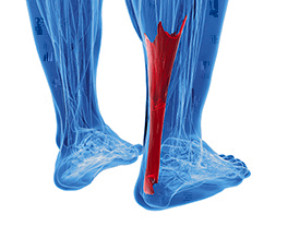
Achilles tendonitis is a common injury to the Achilles tendon which is a strong, fibrous band of tissue which connects the calf muscles to the heel bone at the back of the lower leg. There are two places along the Achilles tendon where someone might develop Achilles tendonitis. Insertional Achilles tendonitis occurs at the bottom of the heel, where the tendon attaches to the heel bone. This type of tendonitis can happen to both athletes and those who live a sedentary lifestyle. It is often accompanied by heel spurs, which can make the tendonitis worse. Non-insertional Achilles tendonitis occurs in the middle of the tendon, approximately 2-4 cm above the ankle. This type of tendonitis is more common in athletes and young people. If you are suffering from Achilles tendon pain or stiffness, please seek the care of a podiatrist. This professional can determine the type of Achilles tendonitis you have and find the right treatment for you.
Achilles tendon injuries need immediate attention to avoid future complications. If you have any concerns, contact Barry P. Weinstein, DPM of Bellaire Podiatry. Our doctor can provide the care you need to keep you pain-free and on your feet.
What Is the Achilles Tendon?
The Achilles tendon is a tendon that connects the lower leg muscles and calf to the heel of the foot. It is the strongest tendon in the human body and is essential for making movement possible. Because this tendon is such an integral part of the body, any injuries to it can create immense difficulties and should immediately be presented to a doctor.
What Are the Symptoms of an Achilles Tendon Injury?
There are various types of injuries that can affect the Achilles tendon. The two most common injuries are Achilles tendinitis and ruptures of the tendon.
Achilles Tendinitis Symptoms
Rupture Symptoms
Treatment and Prevention
Achilles tendon injuries are diagnosed by a thorough physical evaluation, which can include an MRI. Treatment involves rest, physical therapy, and in some cases, surgery. However, various preventative measures can be taken to avoid these injuries, such as:
If you have any questions please feel free to contact one of our offices located in Bellaire and Houston, TX . We offer the newest diagnostic tools and technology to treat your foot and ankle needs.

If left untreated, an ingrown toenail can lead to more serious concerns, such as an infection. Knowing proper nail care can help in the prevention of an ingrown toenail. Give us a call, and get treated!
 Children are often on their feet playing games, participating in sports, and running and jumping around. High levels of activity can increase your child’s chances of developing heel pain. Active children between the ages of 8 and 14 may find themselves with Sever’s disease, an inflammation of the growth plate in the heel. Plantar fasciitis, an inflammation of the ligament that runs along the bottom of the foot, is also common. Children who play high impact sports like football may be more likely to incur Achilles tendon injuries or foot and ankle fractures. If your child complains of heel pain, take them to see a podiatrist. With proper care, your child can make a full recovery.
Many people suffer from bouts of heel pain. For more information, contact Barry P. Weinstein, DPM of Bellaire Podiatry. Our doctor can provide the care you need to keep you pain-free and on your feet.
Causes of Heel Pain
Heel pain is often associated with plantar fasciitis. The plantar fascia is a band of tissues that extends along the bottom of the foot. A rip or tear in this ligament can cause inflammation of the tissue.
Achilles tendonitis is another cause of heel pain. Inflammation of the Achilles tendon will cause pain from fractures and muscle tearing. Lack of flexibility is also another symptom.
Heel spurs are another cause of pain. When the tissues of the plantar fascia undergo a great deal of stress, it can lead to ligament separation from the heel bone, causing heel spurs.
Why Might Heel Pain Occur?
Treatments
Heel pain should be treated as soon as possible for immediate results. Keeping your feet in a stress-free environment will help. If you suffer from Achilles tendonitis or plantar fasciitis, applying ice will reduce the swelling. Stretching before an exercise like running will help the muscles. Using all these tips will help make heel pain a condition of the past.
If you have any questions please contact one of our offices located in Bellaire and Houston, TX . We offer the newest diagnostic and treatment technologies for all your foot and ankle needs.





 accessibility - Default