

You don't need an excuse to have beautiful nails. Step outside without worrying about the appearance of your feet.

People who work all day on their feet can experience throbbing, painful feet at the end of a shift. Along with putting your feet up during work breaks and standing on a cushioned mat, a few simple exercises after hours may help to alleviate the swelling and ease pain. Take your shoes and socks off and sit in a chair. Put a tennis ball on the floor and, using the bottom of your foot, press down and roll it around. Do this for a few minutes and then switch feet. For pain specifically on the bottom of the foot, stand up and lift your leg behind you. Place your toes down behind you and lightly push, feeling the stretch on the bottom of your foot. Hold this position for 10 seconds and then repeat on the other foot. To stretch your ankles, lay on your back and point your toes up towards the ceiling. Alternately point and flex your toes 10 times, and then gently roll your ankles in circles. You can schedule an appointment with a podiatrist who can examine your feet and offer additional ways to support and protect your feet, and relieve any heel or ankle pain you may be experiencing.
While working on the feet, it is important to take the proper care of them. For more information about working on your feet, contact Barry P. Weinstein, DPM from Bellaire Podiatry. Our doctor will treat your foot and ankle needs.
Working on Your Feet
Standing on your feet for long periods of time can cause stress and pain in your feet. Your whole body may experience change in terms of posture, back pain, bunions, callouses and or plantar warts. There are ways to avoid these conditions with proper foot care, smart choices and correct posture.
Positive Changes
Negative heeled shoe – Choosing this shoe type places the heel slightly lower than the ball of the foot. These are great for overall foot health. Find shoes that fit you correctly.
Go barefoot – Our feet were not designed to be enclosed for all hours of the day. Try to periodically expose your feet to air.
Eliminate Pain
Foot Exercises – Performing simple exercises, incorporating yoga and doing stretches are beneficial. This will allow increased blood flow to the area and muscles of the foot.
Achilles tendon – Stretching the foot out flat on the floor will relax the calf muscles and tendon. These exercises can be performed almost anywhere. Make sure you add these exercises to your daily regimen.
With a little bit of this information and knowing more about foot health, you will notice changes. Foot stretches and proper footwear will help with pain and prevent further issues.
If you have any questions please feel free to contact one of our offices located in Bellaire and Houston, TX . We offer the newest diagnostic and treatment technologies for all your foot and ankle needs.
 Normal sweating is your body’s way of regulating its temperature, and is triggered by a rise in temperature or physical exertion. Hyperhidrosis is characterized by excessive sweating that occurs when none of these factors are present. There are two types of hyperhidrosis: primary—which is the most common and typically appears on specific parts of the body including the feet, and secondary—which can be caused by certain medications, or an underlying medical condition. Excessive dampness of the feet may not only be embarrassing and uncomfortable, but it may even lead to athlete’s foot, odor from bacteria, and a breaking down of the skin. If you find that your feet are continuously wet throughout the day, contact a podiatrist who can examine you to see if hyperhidrosis is present, and use a variety of therapies and medicines to help manage it.
If you are suffering from hyperhidrosis contact Barry P. Weinstein, DPM of Bellaire Podiatry. Our doctor can provide the care you need to attend to all of your foot and ankle needs.
Hyperhidrosis of the Feet
Hyperhidrosis is a rare disorder that can cause people to have excessive sweating of their feet. This can usually occur all on its own without rigorous activity involved. People who suffer from hyperhidrosis may also experience sweaty palms.
Although it is said that sweating is a healthy process meant to cool down the body temperature and to maintain a proper internal temperature, hyperhidrosis may prove to be a huge hindrance on a person’s everyday life.
Plantar hyperhidrosis is considered to be the main form of hyperhidrosis. Secondary hyperhidrosis can refer to sweating that occurs in areas other than the feet or hands and armpits. Often this may be a sign of it being related to another medical condition such as menopause, hyperthyroidism and even Parkinson’s disease.
In order to alleviate this condition, it is important to see your doctor so that they may prescribe the necessary medications so that you can begin to live a normal life again. If this is left untreated, it is said that it will persist throughout an individual’s life.
A last resort approach would be surgery, but it is best to speak with your doctor to find out what may be the best treatment for you.
If you have any questions please feel free to contact one of our offices located in Bellaire and Houston, TX . We offer the newest diagnostic and treatment technologies for all your foot and ankle needs.
 While the feet have a variety of functions, issues with the feet can also indicate issues in a variety of other parts of the body. Because of this, podiatrists can often be the first doctors to notice an issue. For example, feet that are too cold, or are blue in color, can indicate circulation problems in the rest of the body. Swollen feet can sometimes indicate heart disease or high blood pressure. The toenails can also indicate a variety of issues. Changes in toenail color can be signs of issues in the lungs, heart, kidneys, or liver, and it can even be a sign of diabetes or an infection. If you are noticing any abnormalities in the feet, consult with a podiatrist to make sure there aren’t any underlying issues.
When dealing with systemic disease of the feet, it is extremely important to check the affected areas routinely so that any additional problems are caught quickly. If you have any concerns about your feet and ankles contact Barry P. Weinstein, DPM from Bellaire Podiatry. Our doctor will assist you with all of your podiatric needs.
Systemic Diseases of the Feet
Systemic diseases affect the whole body, and symptoms usually are displayed in the feet. This condition can make a patient’s ability to walk unbearable. Systemic diseases include gout, diabetes mellitus, neurological disorders, and arthritis.
Gout – is caused by an excess of uric acid in the body. Common symptoms include pain, inflammation, and redness at the metatarsal/phalangeal joint of the base big toe. Gout can be treated by NSAIDs to relieve pain and inflammation, and other drugs that lower the acid levels in the body.
Diabetes mellitus – is an increase in the level of blood sugar that the body cannot counteract with its own insulin. Failure to produce enough insulin is a factor in Diabetes.
Diabetes of the Feet
Diabetic Neuropathy – may lead to damaged nerves and affect the feet through numbness and loss of sensation.
Peripheral Vascular Disease – can restrict the blood flow to the feet, and often times lead to amputation of the feet.
If you have any questions please feel free to contact one of our offices located in Bellaire and Houston, TX . We offer the newest diagnostic and treatment technologies for all your foot and ankle needs.
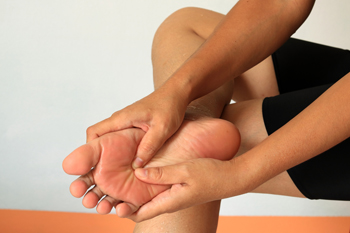 Metatarsalgia is a common foot condition characterized by pain in the front of the foot. When the metatarsal bones are exposed to high levels of stress, they can become inflamed. This leads to symptoms such as sudden or gradually worsening pain in the front of the foot, and burning, aching, shooting, tingling, or a numb sensation in the foot. Metatarsalgia is often associated with other foot conditions, including Morton’s neuroma, metatarsophalangeal synovitis, avascular necrosis, sesamoiditis, and inflammatory arthritis. While anyone can develop this condition, athletes who enjoy running or other high impact sports may be more susceptible. If you have pain in the front of one or both of your feet, please seek the counsel of a podiatrist who can diagnose and treat this ailment.
Foot Pain
Foot pain can be extremely painful and debilitating. If you have a foot pain, consult with Barry P. Weinstein, DPM from Bellaire Podiatry. Our doctor will assess your condition and provide you with quality foot and ankle treatment.
Causes
Foot pain is a very broad condition that could be caused by one or more ailments. The most common include:
Diagnosis
To figure out the cause of foot pain, podiatrists utilize several different methods. This can range from simple visual inspections and sensation tests to X-rays and MRI scans. Prior medical history, family medical history, and any recent physical traumatic events will all be taken into consideration for a proper diagnosis.
Treatment
Treatment depends upon the cause of the foot pain. Whether it is resting, staying off the foot, or having surgery; podiatrists have a number of treatment options available for foot pain.
If you have any questions, please feel free to contact one of our offices located in Bellaire and Houston, TX . We offer the newest diagnostic and treatment technologies for all your foot care needs.
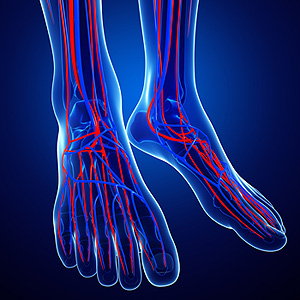
Pitting edema refers to a visible swelling of a specific area caused by fluid buildup in the tissues. When pressure is applied to the area, it leaves a pit in the skin. While pitting edema can occur throughout the body, the feet and ankles are often affected. Beyond swelling and pitting, this condition can also cause tingling or burning sensations, pain, stiffness, numbness, and cramps. There are many potential causes for pitting edema, including poor circulation, obesity, pregnancy, dehydration, and injuries. Treatment will depend on the underlying cause of the condition, but may involve elevating the feet, wearing compression socks, or taking certain medications. If you notice swelling in your feet or ankles, please consult with a podiatrist.
Poor circulation is a serious condition and needs immediate medical attention. If you have any concerns with poor circulation in your feet contact Barry P. Weinstein, DPM of Bellaire Podiatry. Our doctor will treat your foot and ankle needs.
Poor Circulation in the Feet
Poor blood circulation in the feet and legs is can be caused by peripheral artery disease (PAD), which is the result of a buildup of plaque in the arteries.
Plaque buildup or atherosclerosis results from excess calcium and cholesterol in the bloodstream. This can restrict the amount of blood which can flow through the arteries. Poor blood circulation in the feet and legs are sometimes caused by inflammation in the blood vessels, known as vasculitis.
Causes
Lack of oxygen and oxygen from poor blood circulation restricts muscle growth and development. It can also cause:
Those who have diabetes or smoke are at greatest risk for poor circulation, as are those who are over 50. If you have poor circulation in the feet and legs it may be caused by PAD and is important to make changes to your lifestyle in order to reduce risk of getting a heart attack or stroke. Exercise and maintaining a healthy lifestyle will dramatically improve conditions.
As always, see a podiatrist as he or she will assist in finding a regimen that suits you. A podiatrist can also prescribe you any needed medication.
If you have any questions please feel free to contact one of our offices located in Bellaire and Houston, TX . We offer the newest diagnostic and treatment technologies for all your foot and ankle needs.

Do you suffer from heel pain when you get up in the morning? If so, you should seek professional help and have a proper diagnosis performed. Heel pain can be caused by several different foot-related conditions.
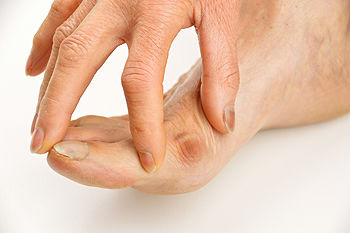
Bunions—a very common foot disorder—are bony protrusions on the joint of the big toe, which cause it to point towards the second toe. Bunions can be very painful and are often genetic, or caused by wearing shoes that are too tight. Bunionettes, or tailor’s bunions, are a form of bunion that appears on the outside of the pinky toe. Bunions and bunionettes are painful, and can cause swelling, redness, and soreness around the joint, along with limited range of movement. Bunions that are left untreated can cause deformities or misalignments in the foot and may require surgery to correct. One of the best ways to prevent bunions and bunionettes from forming is to wear comfortable, low-heeled shoes with a rounded toe-box, which will allow plenty of room for your toes to spread out and move freely. Contact a podiatrist who can offer preventative measures against bunions, or treat them successfully if they do form.
If you are suffering from bunion pain, contact Barry P. Weinstein, DPM of Bellaire Podiatry. Our doctor can provide the care you need to keep you pain-free and on your feet.
What Is a Bunion?
Bunions are painful bony bumps that usually develop on the inside of the foot at the joint of the big toe. As the deformity increases over time, it may become painful to walk and wear shoes. Women are more likely to exacerbate existing bunions since they often wear tight, narrow shoes that shift their toes together. Bunion pain can be relieved by wearing wider shoes with enough room for the toes.
Causes
Symptoms
In order to diagnose your bunion, your podiatrist may ask about your medical history, symptoms, and general health. Your doctor might also order an x-ray to take a closer look at your feet. Nonsurgical treatment options include orthotics, padding, icing, changes in footwear, and medication. If nonsurgical treatments don’t alleviate your bunion pain, surgery may be necessary.
If you have any questions, please feel free to contact one of our offices located in Bellaire and Houston, TX . We offer the newest diagnostic and treatment technologies for all your foot care needs.
The majority o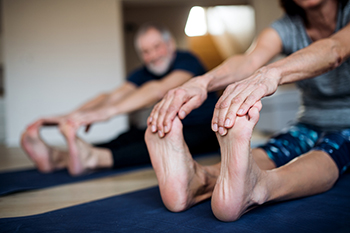 f ballet dancers understand the importance of properly stretching the feet before a dance recital. Proper balance is achieved when there is adequate strength and flexibility, and this is often accomplished by performing simple stretches. An effective stretch can consist of placing one foot over the opposite thigh while sitting on the floor, and pushing into the heel with your hand until a gentle stretch is felt. This is one of several stretches that can keep the flexibility that is needed for graceful ballet dancing. If you would like additional information about how to safely perform foot stretches that may help to enhance your dance routine, please confer with a podiatrist.
Stretching the feet is a great way to prevent injuries. If you have any concerns with your feet consult with Barry P. Weinstein, DPM from Bellaire Podiatry. Our doctor will assess your condition and provide you with quality foot and ankle treatment.
Stretching the Feet
Stretching the muscles in the foot is an important part in any physical activity. Feet that are tight can lead to less flexibility and make you more prone to injury. One of the most common forms of foot pain, plantar fasciitis, can be stretched out to help ease the pain. Stretching can not only ease pain from plantar fasciitis but also prevent it as well. However, it is important to see a podiatrist first if stretching is right for you. Podiatrists can also recommend other ways to stretch your feet. Once you know whether stretching is right for you, here are some excellent stretches you can do.
It is best to go easy when first stretching your foot and work your way up. If your foot starts hurting, stop exercising and ice and rest the foot. It is advised to then see a podiatrist for help.
If you have any questions, please feel free to contact one of our offices located in Bellaire and Houston, TX . We offer the newest diagnostic and treatment technologies for all your foot care needs.
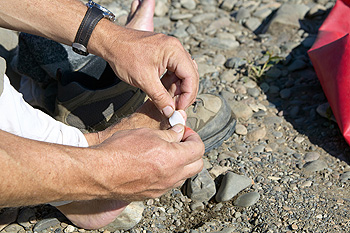 Patients who develop blisters on their feet are often aware of the discomfort they can cause. They generally form as a result of excessive friction that may come from wearing shoes that do not fit correctly. It is considered to be the body’s natural way to heal damaged skin. Blisters are defined as a small area of fluid that forms over the injured skin. The blister will gradually drain as new skin grows, and it is important to keep it protected while wearing shoes. People who run may be prone to developing blisters, and it may help to soak the feet when the running activity is completed. If you have blisters on your feet, and would like to learn about possible preventive methods, it is suggestd that you speak with a podiatrist.
Blisters may appear as a single bubble or in a cluster. They can cause a lot of pain and may be filled with pus, blood, or watery serum. If your feet are hurting, contact Barry P. Weinstein, DPM of Bellaire Podiatry. Our doctor can provide the care you need to keep you pain-free and on your feet.
Foot Blisters
Foot blisters are often the result of friction. This happens due to the constant rubbing from shoes, which can lead to pain.
What Are Foot Blisters?
A foot blister is a small fluid-filled pocket that forms on the upper-most layer of the skin. Blisters are filled with clear fluid and can lead to blood drainage or pus if the area becomes infected.
Symptoms
(Blister symptoms may vary depending on what is causing them)
Prevention & Treatment
In order to prevent blisters, you should be sure to wear comfortable shoes with socks that cushion your feet and absorb sweat. Breaking a blister open may increase your chances of developing an infection. However, if your blister breaks, you should wash the area with soap and water immediately and then apply a bandage to the affected area. If your blisters cause severe pain it is important that you call your podiatrist right away.
If you have any questions, please feel free to contact one of our offices located in Bellaire and Houston, TX . We offer the newest diagnostic and treatment technologies for all your foot care needs.





 accessibility - Default