
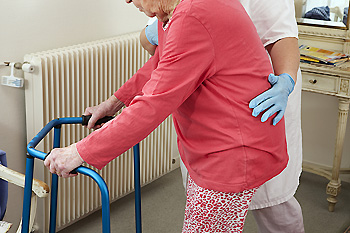
 It is crucial for elderly patients to protect themselves in their homes. This may be helpful in preventing falling, which can cause serious health issues and complications with the feet. It may be beneficial to slow your pace as you walk and complete tasks in your home. Additionally, it can help to wear slippers that have a non-slip sole. Research has indicated that when grab bars are installed in the shower and bath area, the risk of falling may be reduced. It is important to have routine medical exams so current prescriptions may be evaluated, in addition to having a thorough eye exam. If you would like more information about falls prevention techniques and how to help protect your feet, it’s suggested that you consult with a podiatrist.
Preventing falls among the elderly is very important. If you are older and have fallen or fear that you are prone to falling, consult with Barry P. Weinstein, DPM from Bellaire Podiatry. Our doctor will assess your condition and provide you with quality advice and care.
Every 11 seconds, an elderly American is being treated in an emergency room for a fall related injury. Falls are the leading cause of head and hip injuries for those 65 and older. Due to decreases in strength, balance, senses, and lack of awareness, elderly persons are very susceptible to falling. Thankfully, there are a number of things older persons can do to prevent falls.
How to Prevent Falls
Some effective methods that older persons can do to prevent falls include:
Falling can be a traumatic and embarrassing experience for elderly persons; this can make them less willing to leave the house, and less willing to talk to someone about their fears of falling. Doing such things, however, will increase the likelihood of tripping or losing one’s balance. Knowing the causes of falling and how to prevent them is the best way to mitigate the risk of serious injury.
If you have any questions, please feel free to contact one of our offices located in Bellaire and Houston, TX . We offer the newest diagnostic and treatment technologies for all your foot care needs.
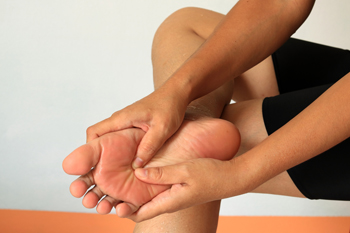 The medical condition that is known as Morton’s neuroma typically affects the area between the third and fourth toe. It can occur as a result of a compressed nerve, and may cause severe pain and discomfort. Some of the symptoms that are generally associated with this condition can include a numbing or tingling sensation, and it may hurt to have full range of motion while walking. This ailment can be caused by wearing shoes that do not fit correctly, participating in sporting activities that involve the ball of the foot, or it may develop from previous scar tissue. Moderate relief may be found when the affected foot is elevated. Additionally, it may be beneficial to wear custom-made orthotics, which can help to relieve a portion of the pressure. If you are afflicted with Morton’s neuroma, it is strongly suggested that you are under the care of a podiatrist.
Morton’s neuroma is a very uncomfortable condition to live with. If you think you have Morton’s neuroma, contact Barry P. Weinstein, DPM of Bellaire Podiatry. Our doctor will attend to all of your foot care needs and answer any of your related questions.
Morton’s Neuroma
Morton's neuroma is a painful foot condition that commonly affects the areas between the second and third or third and fourth toe, although other areas of the foot are also susceptible. Morton’s neuroma is caused by an inflamed nerve in the foot that is being squeezed and aggravated by surrounding bones.
What Increases the Chances of Having Morton’s Neuroma?
Morton’s neuroma is a very treatable condition. Orthotics and shoe inserts can often be used to alleviate the pain on the forefront of the feet. In more severe cases, corticosteroids can also be prescribed. In order to figure out the best treatment for your neuroma, it’s recommended to seek the care of a podiatrist who can diagnose your condition and provide different treatment options.
If you have any questions, please feel free to contact one of our offices located in Bellaire and Houston, TX . We offer the newest diagnostic and treatment technologies for all your foot care needs.
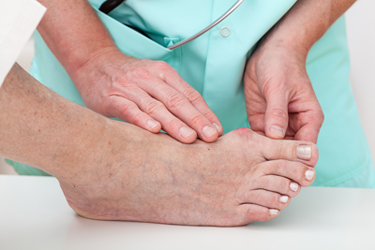 The medical term for a condition that is referred to as a bunion, is known as a hallux valgus deformity. It is defined as a bony protrusion that forms on the side of the big toe, and may affect the positioning toes next to it. It may occur from genetic factors, or from wearing shoes that do not have adequate room for the toes to move freely in. This condition is also considered to be a form of arthritis. It may lead to bursitis, which is an inflammation that develops over the affected joint. If you are in the beginning stages of developing a bunion, it is advised that you are under the care of a podiatrist who can offer a correct diagnosis and begin the proper treatment.
If you are suffering from bunion pain, contact Barry P. Weinstein, DPM of Bellaire Podiatry. Our doctor can provide the care you need to keep you pain-free and on your feet.
What Is a Bunion?
Bunions are painful bony bumps that usually develop on the inside of the foot at the joint of the big toe. As the deformity increases over time, it may become painful to walk and wear shoes. Women are more likely to exacerbate existing bunions since they often wear tight, narrow shoes that shift their toes together. Bunion pain can be relieved by wearing wider shoes with enough room for the toes.
Causes
Symptoms
In order to diagnose your bunion, your podiatrist may ask about your medical history, symptoms, and general health. Your doctor might also order an x-ray to take a closer look at your feet. Nonsurgical treatment options include orthotics, padding, icing, changes in footwear, and medication. If nonsurgical treatments don’t alleviate your bunion pain, surgery may be necessary.
If you have any questions, please feel free to contact one of our offices located in Bellaire and Houston, TX . We offer the newest diagnostic and treatment technologies for all your foot care needs.
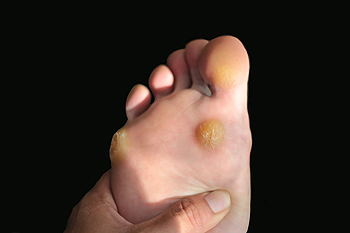 Patients who have experienced corns on their toes are often aware of the pain and discomfort they may cause. A corn is defined as a portion of skin that has thickened as a result of excess friction. This can happen when shoes that are worn do not fit correctly. Common places for a corn to develop can be on the inside or top of the toes, in addition to the bottom of the feet. Some patients find moderate relief when the foot is soaked in warm water, followed by using a pumice stone to gently remove the corn. For severe or stubborn corns, it is suggested that you seek the counsel of a podiatrist who can guide you toward the correct treatment options.
Corns can make walking very painful and should be treated immediately. If you have questions regarding your feet and ankles, contact Barry P. Weinstein, DPM of Bellaire Podiatry. Our doctor will treat your foot and ankle needs.
Corns: What Are They? And How Do You Get Rid of Them?
Corns are thickened areas on the skin that can become painful. They are caused by excessive pressure and friction on the skin. Corns press into the deeper layers of the skin and are usually round in shape.
Ways to Prevent Corns
There are many ways to get rid of painful corns such as:
Treating Corns
Although most corns slowly disappear when the friction or pressure stops, this isn’t always the case. Consult with your podiatrist to determine the best treatment option for your case of corns.
If you have any questions please feel free to contact one of our offices located in Bellaire and Houston, TX . We offer the newest diagnostic and treatment technologies for all your foot and ankle needs.

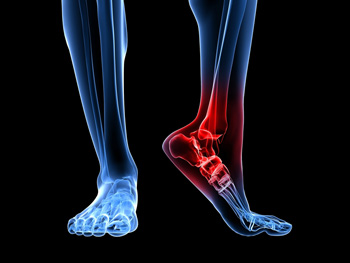 The plantar fascia is a band of tissue that connects the heel to the toes. Strained ligaments in this part of the foot may cause a condition to occur that is referred to as plantar fasciitis. This ailment is considered to be the most common cause of foot pain in adults. The plantar fascia helps to provide the necessary support while performing running and jumping activities, and can cause severe pain and discomfort if it becomes inflamed. Plantar fasciitis may happen for a variety of reasons. These may include experiencing a foot injury, wearing shoes that do not fit correctly, or from standing for extended periods of time throughout the day. Common symptoms that patients may feel can consist of heel pain, which may be more prominent early in the morning. There are several types of treatments available, and it is suggested that you consult with a podiatrist who can help you to determine which one is the best one for you.
Plantar fasciitis can be very painful and inconvenient. If you are experiencing heel pain or symptoms of plantar fasciitis, contact Barry P. Weinstein, DPM from Bellaire Podiatry. Our doctor can provide the care you need to keep you pain-free and on your feet.
What Is Plantar Fasciitis?
Plantar fasciitis is the inflammation of the thick band of tissue that runs along the bottom of your foot, known as the plantar fascia, and causes mild to severe heel pain.
What Causes Plantar Fasciitis?
How Can It Be Treated?
While very treatable, plantar fasciitis is definitely not something that should be ignored. Especially in severe cases, speaking to your doctor right away is highly recommended to avoid complications and severe heel pain. Your podiatrist can work with you to provide the appropriate treatment options tailored to your condition.
If you have any questions please feel free to contact one of our offices located in Bellaire and Houston, TX . We offer the newest diagnostic and treatment technologies for all your foot and ankle needs.
Heel pain is a condition that many patients experience, and it may be caused due to a variety of reasons. The medical ailment that is known as plantar fasciitis is a common cause of heel pain, and can be extremely uncomfortable. Additionally, a tear or injury to the Achilles tendon may cause sharp pain that is felt in the calf and the heel. If an injury has occurred, moderate relief may be found when the foot is elevated, and the affected area is given rest as often as possible. For severe heel pain, it is strongly advised that you consult with a podiatrist as quickly as possible to determine the cause, and allow for proper treatment to begin.
Many people suffer from bouts of heel pain. For more information, contact Barry P. Weinstein, DPM of Bellaire Podiatry. Our doctor can provide the care you need to keep you pain-free and on your feet.
Causes of Heel Pain
Heel pain is often associated with plantar fasciitis. The plantar fascia is a band of tissues that extends along the bottom of the foot. A rip or tear in this ligament can cause inflammation of the tissue.
Achilles tendonitis is another cause of heel pain. Inflammation of the Achilles tendon will cause pain from fractures and muscle tearing. Lack of flexibility is also another symptom.
Heel spurs are another cause of pain. When the tissues of the plantar fascia undergo a great deal of stress, it can lead to ligament separation from the heel bone, causing heel spurs.
Why Might Heel Pain Occur?
Treatments
Heel pain should be treated as soon as possible for immediate results. Keeping your feet in a stress-free environment will help. If you suffer from Achilles tendonitis or plantar fasciitis, applying ice will reduce the swelling. Stretching before an exercise like running will help the muscles. Using all these tips will help make heel pain a condition of the past.
If you have any questions please contact one of our offices located in Bellaire and Houston, TX . We offer the newest diagnostic and treatment technologies for all your foot and ankle needs.
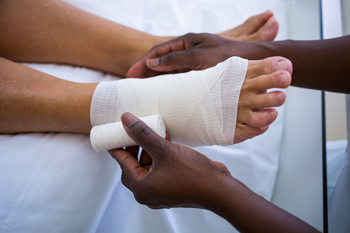 People can develop a wound for a number of reasons. When a wound has occurred, it’s important that you be able to identify it, that way you know how best to treat it. Wounds may either be open or closed. Open wounds break the skin and may leave the internal tissue exposed. Closed wounds, however, do not break the skin. These types of wounds may involve tissue damage or bleeding that occurs underneath the skin’s surface. Whether a wound is opened or closed, immediate care should be sought in order to help prevent getting an infection. Those with diabetes should take particular care of their feet in order to avoid getting a wound, as they are more likely to develop an infection, which may lead to further foot complications. For more advice on how to identify and treat wounds of the feet, we recommend you consult with a podiatrist for professional care and treatment.
Wound care is an important part in dealing with diabetes. If you have diabetes and a foot wound or would like more information about wound care for diabetics, consult with Barry P. Weinstein, DPM from Bellaire Podiatry. Our doctor will assess your condition and provide you with quality foot and ankle treatment.
What Is Wound Care?
Wound care is the practice of taking proper care of a wound. This can range from the smallest to the largest of wounds. While everyone can benefit from proper wound care, it is much more important for diabetics. Diabetics often suffer from poor blood circulation which causes wounds to heal much slower than they would in a non-diabetic.
What Is the Importance of Wound Care?
While it may not seem apparent with small ulcers on the foot, for diabetics, any size ulcer can become infected. Diabetics often also suffer from neuropathy, or nerve loss. This means they might not even feel when they have an ulcer on their foot. If the wound becomes severely infected, amputation may be necessary. Therefore, it is of the upmost importance to properly care for any and all foot wounds.
How to Care for Wounds
The best way to care for foot wounds is to prevent them. For diabetics, this means daily inspections of the feet for any signs of abnormalities or ulcers. It is also recommended to see a podiatrist several times a year for a foot inspection. If you do have an ulcer, run the wound under water to clear dirt from the wound; then apply antibiotic ointment to the wound and cover with a bandage. Bandages should be changed daily and keeping pressure off the wound is smart. It is advised to see a podiatrist, who can keep an eye on it.
If you have any questions, please feel free to contact one of our offices located in Bellaire and Houston, TX . We offer the newest diagnostic and treatment technologies for all your foot care needs.
Those with peripheral artery disease, or PAD for short, may experience chronic ischemia, better known as a lack of blood supply. When this occurs, you may experience a dull, cramping pain in the affected area, commonly the feet, when exercising. The pain often stops when resting. This kind of symptom is referred to as claudication. For a proper diagnosis, a podiatrist may suggest taking an ABI, or ankle brachial index. This exam consists of using ultrasound images that will measure the blood pressure in your feet. This type of test is common for diagnosing PAD, and is painless. PAD is likely to develop among adults over the age of 50, and is especially common for those with diabetes. For more information about peripheral artery disease, and to discuss a plan for treatment, we recommend you consult with a podiatrist for professional care.
Peripheral artery disease can pose a serious risk to your health. It can increase the risk of stroke and heart attack. If you have symptoms of peripheral artery disease, consult with Barry P. Weinstein, DPM from Bellaire Podiatry. Our doctor will assess your condition and provide you with quality foot and ankle treatment.
Peripheral artery disease (PAD) is when arteries are constricted due to plaque (fatty deposits) build-up. This results in less blood flow to the legs and other extremities. The main cause of PAD is atherosclerosis, in which plaque builds up in the arteries.
Symptoms
Symptoms of PAD include:
It is important to note that a majority of individuals never show any symptoms of PAD.
Diagnosis
While PAD occurs in the legs and arteries, Podiatrists can diagnose PAD. Podiatrists utilize a test called an ankle-brachial index (ABI). An ABI test compares blood pressure in your arm to you ankle to see if any abnormality occurs. Ultrasound and imaging devices may also be used.
Treatment
Fortunately, lifestyle changes such as maintaining a healthy diet, exercising, managing cholesterol and blood sugar levels, and quitting smoking, can all treat PAD. Medications that prevent clots from occurring can be prescribed. Finally, in some cases, surgery may be recommended.
If you have any questions, please feel free to contact one of our offices located in Bellaire and Houston, TX . We offer the newest diagnostic and treatment technologies for all your foot care needs.

Your feet are covered most of the day. If you're diabetic, periodic screening is important for good health. Numbness is often a sign of diabetic foot and can mask a sore or wound.





 accessibility - Default