
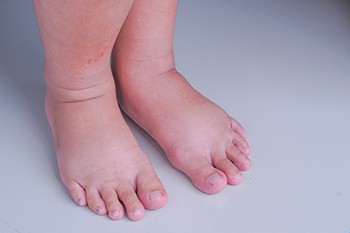
Swelling is defined as specific areas of the body becoming larger, and this pertains to the feet and ankles. There are various reasons for the feet to swell, including enduring a foot or ankle injury, pregnancy, and medical conditions such as lymphedema. Additionally, taking specific medications may cause the feet to swell. These can consist of hormones, antidepressants, or medicine for diabetes. Research has shown that eating certain foods may be linked to having swollen feet. Foods that are regularly eaten such as processed, refined, and salted may increase the chances of developing swollen feet. Foods that are made with a large amount of sugar and fats such as vegetable oil may also be linked to having swollen feet. If your feet and ankles are swollen and become uncomfortable, please consult with a podiatrist who can guide you toward determining the reason for this condition and offer correct treatment methods.
Swollen feet can be a sign of an underlying condition. If you have any concerns, contact Barry P. Weinstein, DPM of Bellaire Podiatry. Our doctor can provide the care you need to keep you pain-free and on your feet.
Swollen feet are a common ailment among pregnant women and people who stand or sit for extended periods. Aging may increase the possibility of swollen feet and patients who are obese often notice when their feet are swelling too. There may be medical reasons why swollen feet occur:
Swollen feet can also be caused by bone and tendon conditions, including fractures, arthritis, and tendinitis. Additionally, there may be skin and toenail conditions and an infection may cause the feet to swell. Patients who take medicine to treat high blood pressure may be prone to getting swollen feet.
Many patients elevate their feet to help relieve the swelling and this is generally a temporary remedy. When a podiatrist is consulted the reason behind the swelling can be uncovered and subsequently treated.
If you have any questions please feel free to contact one of our offices located in Bellaire and Houston, TX . We offer the newest diagnostic tools and technology to treat your foot and ankle needs.
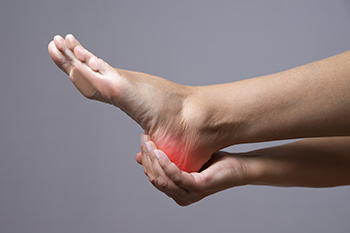
Heel pain can happen for a variety of reasons. While it can be caused by a systemic illness, such as gout or rheumatoid arthritis, it often develops from overuse. Common causes of heel pain include plantar fasciitis, heel spurs, and Achilles tendonitis. Plantar fasciitis is an inflammation of the plantar fascia, the band of tissue that runs from the heel to the toes on the sole of the foot. This can happen when the plantar fascia is overloaded or overstretched and small tears may develop. A heel spur is an abnormal bony growth at the junction of the plantar fascia and heel bone. A spur can come from strain on the plantar fascia and muscles of the foot. Achilles tendonitis is an inflammation of the Achilles tendon. It is triggered by overuse, particularly excessive jumping in sports. With all these conditions, ill fitting or worn out shoes can aggravate the problem. If you have heel pain that does not respond to rest, shoes that fit well, and are appropriate for your activity, please see a podiatrist who can properly diagnose the problem and provide treatment.
Many people suffer from bouts of heel pain. For more information, contact Barry P. Weinstein, DPM of Bellaire Podiatry. Our doctor can provide the care you need to keep you pain-free and on your feet.
Causes of Heel Pain
Heel pain is often associated with plantar fasciitis. The plantar fascia is a band of tissues that extends along the bottom of the foot. A rip or tear in this ligament can cause inflammation of the tissue.
Achilles tendonitis is another cause of heel pain. Inflammation of the Achilles tendon will cause pain from fractures and muscle tearing. Lack of flexibility is also another symptom.
Heel spurs are another cause of pain. When the tissues of the plantar fascia undergo a great deal of stress, it can lead to ligament separation from the heel bone, causing heel spurs.
Why Might Heel Pain Occur?
Treatments
Heel pain should be treated as soon as possible for immediate results. Keeping your feet in a stress-free environment will help. If you suffer from Achilles tendonitis or plantar fasciitis, applying ice will reduce the swelling. Stretching before an exercise like running will help the muscles. Using all these tips will help make heel pain a condition of the past.
If you have any questions please contact one of our offices located in Bellaire and Houston, TX . We offer the newest diagnostic and treatment technologies for all your foot and ankle needs.
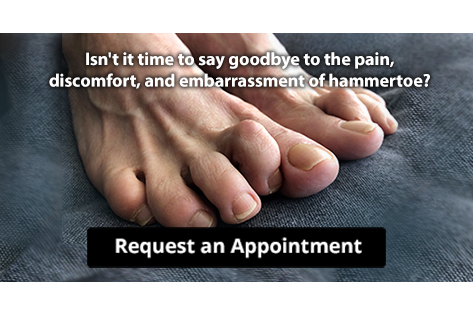
Painful deformities, such as hammertoes, can be treated. Stop living with foot pain, and have beautiful feet again!
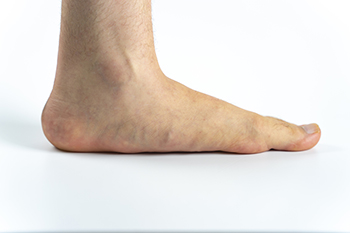
Flat feet happen when the feet are flush with the ground. Sometimes flat feet can contribute to foot, ankle, or knee problems because they can alter leg alignment. Flat feet can be a result of overuse injuries, excess weight, a bone deformity, or a tendon tear or rupture. Sometimes flat feet are genetic. There are no gender differences for risk of flat feet. A person with flat feet may not be allowed in the military because spinal damage can happen to such a person when marching. Having flat feet can also cause overpronation in runners. Flat feet can also interfere with proper balance as body weight is unevenly distributed and present more of a risk for falling. Orthotics, braces, or insoles might help flat feet. If there is no pain, treatment for flat feet is not needed. If you have flat feet and they are causing discomfort, see a podiatrist who can examine your feet and provide options to address your symptoms.
Flatfoot is a condition many people suffer from. If you have flat feet, contact Barry P. Weinstein, DPM from Bellaire Podiatry. Our doctor will treat your foot and ankle needs.
What Are Flat Feet?
Flatfoot is a condition in which the arch of the foot is depressed and the sole of the foot is almost completely in contact with the ground. About 20-30% of the population generally has flat feet because their arches never formed during growth.
Conditions & Problems:
Having flat feet makes it difficult to run or walk because of the stress placed on the ankles.
Alignment – The general alignment of your legs can be disrupted, because the ankles move inward which can cause major discomfort.
Knees – If you have complications with your knees, flat feet can be a contributor to arthritis in that area.
Symptoms
Treatment
If you are experiencing pain and stress on the foot you may weaken the posterior tibial tendon, which runs around the inside of the ankle.
If you have any questions please feel free to contact one of our offices located in Bellaire and Houston, TX . We offer the newest diagnostic and treatment technologies for all your foot and ankle needs.
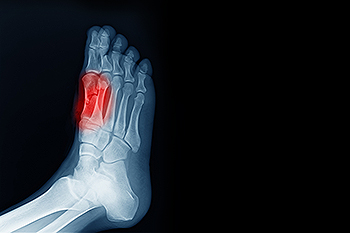
Two tiny bones in the feet located just below the big toe are called the sesamoid bones. The sesamoid bones are at work each time you walk or run, providing leverage to the big toe. When these bones, which are held in place by tendons or embedded in muscle, become irritated, the result is an inflammatory condition known as sesamoiditis. It is considered an overuse injury. People who spend a lot of time on their feet for work, sports, or high-impact activities often incur sesamoiditis. In addition, people with flat feet or high arches may experience this inflammation. Symptoms generally do not emerge suddenly, but instead, develop over a period of time. You may feel intermittent pain in the big toe, notice swelling or bruising in the area, or experience a decrease in the normal functioning of the big toe. Resting the foot often is a good idea, and wearing orthotics in the shoes is another. For more information on how to deal with sesamoiditis, including being fitted for custom orthotics, please consult a podiatrist.
Sesamoiditis is an unpleasant foot condition characterized by pain in the balls of the feet. If you think you’re struggling with sesamoiditis, contact Barry P. Weinstein, DPM of Bellaire Podiatry. Our doctor will treat your condition thoroughly and effectively.
Sesamoiditis
Sesamoiditis is a condition of the foot that affects the ball of the foot. It is more common in younger people than it is in older people. It can also occur with people who have begun a new exercise program, since their bodies are adjusting to the new physical regimen. Pain may also be caused by the inflammation of tendons surrounding the bones. It is important to seek treatment in its early stages because if you ignore the pain, this condition can lead to more serious problems such as severe irritation and bone fractures.
Causes of Sesamoiditis
Treatment for sesamoiditis is non-invasive and simple. Doctors may recommend a strict rest period where the patient forgoes most physical activity. This will help give the patient time to heal their feet through limited activity. For serious cases, it is best to speak with your doctor to determine a treatment option that will help your specific needs.
If you have any questions please feel free to contact one of our offices located in Bellaire and Houston, TX . We offer the newest diagnostic and treatment technologies for all your foot and ankle needs.

After your baby is born, taking care of their feet is of major importance. Experts agree that giving babies the freedom to move their legs and feet is how they develop muscle strength. Until the baby is ready to stand or walk, it is beneficial to let them go barefoot as often as possible. Any shoes or other foot coverings should be fitted properly and checked often as the baby's feet grow quickly. This includes onesies that may be too tight as the baby’s length increases. Keep your baby’s feet clean and dry. As your baby starts to stand or walk, be aware of any abnormalities that may be apparent, such as in-toeing or out-toeing. Once the baby starts walking outside the home, choosing the right shoes is important. It’s suggested that you measure your baby’s feet periodically to make sure their shoes are not too tight in the toes, too loose in the heel, or too narrow. For more guidance on proper foot care for your baby, please consult a podiatrist.
The health of a child’s feet is vital to their overall well-being. If you have any questions regarding foot health, contact Barry P. Weinstein, DPM of Bellaire Podiatry. Our doctor can provide the care you need to keep you pain-free and on your feet.
Tips for Keeping Children's Feet Healthy
If you have any questions, please feel free to contact one of our offices located in Bellaire and Houston, TX . We offer the newest diagnostic and treatment technologies for all your foot care needs.
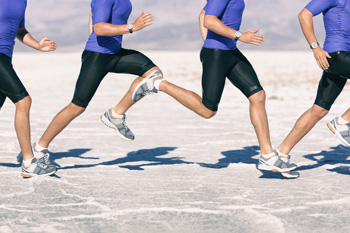
Many individuals who are serious about taking care of their feet will also take the necessary steps to learn about the biomechanics of the feet. Knowing more about how the foot functions can help us to better protect the feet. For example, the subtalar joint is something important to be aware of because it serves important functions. The subtalar joint is formed between two very important bones, the talus, and calcaneus. The subtalar joint, as a unit, is composed of both posterior and anterior joints. This joint is responsible for many different kinds of movements. For example, the subtalar joint facilitates, in large part, both supination and pronation. Therefore, the importance of taking care of the subtalar joint can not be overstated. Contact a podiatrist today if you are interested in learning more about foot biomechanics.
If you have any concerns about your feet, contact Barry P. Weinstein, DPM from Bellaire Podiatry. Our doctor can provide the care you need to keep you pain-free and on your feet.
Biomechanics in Podiatry
Podiatric biomechanics is a particular sector of specialty podiatry with licensed practitioners who are trained to diagnose and treat conditions affecting the foot, ankle and lower leg. Biomechanics deals with the forces that act against the body, causing an interference with the biological structures. It focuses on the movement of the ankle, the foot and the forces that interact with them.
A History of Biomechanics
Modern technological improvements are based on past theories and therapeutic processes that provide a better understanding of podiatric concepts for biomechanics. Computers can provide accurate information about the forces and patterns of the feet and lower legs.
Understanding biomechanics of the feet can help improve and eliminate pain, stopping further stress to the foot.
If you have any questions please feel free to contact one of our offices located in Bellaire and Houston, TX . We offer the newest diagnostic and treatment technologies for all your foot and ankle needs.

Plantar warts are small growths that develop on parts of the feet that bear weight. They're typically found on the bottom of the foot. Don't live with plantar warts, and call us today!
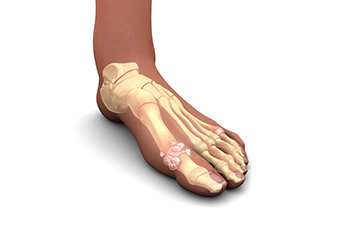
The common symptoms that many people experience with the foot condition that is known as gout is debilitating pain, swelling, and the affected toe may be red. It is an ailment that affects the joints in the big toe and happens from excess uric acid in the blood. This may happen from genetic reasons or from eating foods that have high amounts of purines. These can include red meat, excess alcohol, shellfish, and drinks that are made with large amounts of sugar. The pain comes from crystals that form in the joints of the big toe and can affect completing daily activities. Ultimately, frequent gout attacks may damage the kidneys, bones, and joints, and it is suggested that a healthy diet and exercise program is implemented. This may be helpful in avoiding future painful bouts with gout. A podiatrist can provide treatment to people who have gout, in addition to discussing effective prevention methods. Please contact a podiatrist for the relief and information you are seeking.
Gout is a foot condition that requires certain treatment and care. If you are seeking treatment, contact Barry P. Weinstein, DPM from Bellaire Podiatry. Our doctor will treat your foot and ankle needs.
What Is Gout?
Gout is a type of arthritis caused by a buildup of uric acid in the bloodstream. It often develops in the foot, especially the big toe area, although it can manifest in other parts of the body as well. Gout can make walking and standing very painful and is especially common in diabetics and the obese.
People typically get gout because of a poor diet. Genetic predisposition is also a factor. The children of parents who have had gout frequently have a chance of developing it themselves.
Gout can easily be identified by redness and inflammation of the big toe and the surrounding areas of the foot. Other symptoms include extreme fatigue, joint pain, and running high fevers. Sometimes corticosteroid drugs can be prescribed to treat gout, but the best way to combat this disease is to get more exercise and eat a better diet.
If you have any questions please feel free to contact one of our offices located in Bellaire and Houston, TX . We offer the newest diagnostic and treatment technologies for all your foot and ankle needs.
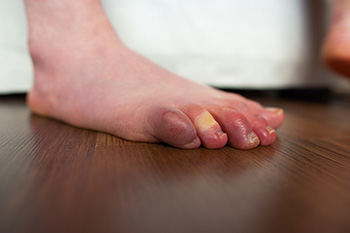
Various conditions can affect the feet, and erythromelalgia is considered to be a rare foot condition. Common symptoms that are often experienced with this ailment can include burning pain, increased skin temperature, and the affected area may be red. The reason this condition can occur is unknown, despite researchers discovering it may happen from abnormalities in the blood flow. Many patients who are afflicted with erythromelalgia may notice these symptoms gradually appear, and their frequency can increase over time. Patients have found mild relief when their feet are immersed in ice water, or by exposing them to cold air from an air conditioner or fan. People who are experiencing these symptoms are urged to contact a podiatrist as quickly as possible who can effectively diagnose this condition, and prescribe medication for possible relief.
Some foot conditions may require additional professional care. If you have any concerns, contact Barry P. Weinstein, DPM of Bellaire Podiatry. Our doctor can provide the care you need to keep you pain-free and on your feet.
Rare Foot Conditions
The majority of foot conditions are common and can be treated by a podiatrist. Standard diagnostic procedures are generally used to identify specific conditions and treatment can be rendered. A podiatrist also treats rare foot conditions which can be difficult to diagnose and may need extra attention and care.
There are many rare foot conditions that can affect children. Some of these can include:
Freiberg’s disease - This can be seen as a deterioration and flattening of a metatarsal bone that exists in the ball of the foot. It typically affects pre-teen and teenage girls, but can affect anyone at any age. Symptoms that can accompany this can be swelling, stiffness, and the patient may limp.
Kohler’s disease - This often targets the bone in the arch of the foot and affects younger boys. It can lead to an interruption of the blood supply which ultimately can lead to bone deterioration. The patient may limp or experience tenderness, swelling, and redness.
Maffucci syndrome - This affects the long bones in a child’s foot leading to the development of abnormal bone lesions. They are benign growths and typically develop in early childhood and the bones may be susceptible to breaking.
A podiatrist can properly diagnose and treat all types of rare foot conditions. If your child is affected by any of these symptoms or conditions, please don’t hesitate to call our office so the correct treatment method can begin.
If you have any questions please feel free to contact one of our offices located in Bellaire and Houston, TX . We offer the newest diagnostic tools and technology to treat your foot and ankle needs.





 accessibility - Default